
What Happens When an Employee Leaves an EOT
If you run a business under an Employee Ownership Trust, understanding what happens when an employee leaves an EOT is critical. The way leavers are handled affects compliance, fairness, and trust governance.

Why It matters: What happens when an employee leaves an EOT
When an employee exits, the process isn’t just about payroll and HR. It’s also a matter of maintaining accurate trust records and adhering to EOT rules. Updating the beneficiary list, assessing bonus eligibility, and notifying trustees are all essential steps. Neglecting these actions can lead to payroll errors, benefit disputes, and even breaches of HMRC requirements.

Step-by-step: What Happens when an employee leaves an EOT
Our free guide details the complete process, including:
- Confirming the final working day and employment status
- Checking eligibility for a pro-rated tax-free bonus
- Reviewing protected leave situations (maternity, sickness)
- Removing the leaver from the trust beneficiary register
- Aligning HR, payroll, and trust records for accuracy
These actions ensure the departure is processed fairly and in line with both trust agreements and legal obligations.
Best practices for managing leavers
The guide includes real-world timelines, from removing a leaver within seven days to annual beneficiary reviews, so nothing slips through the cracks. Case examples show how consistent offboarding conversations help manage expectations and preserve employee trust in the EOT model.
More free guides for founders
You’ll also find resources on trustee governance, long-term compliance, EOT tax relief rules, and strategies for maintaining engagement after the transition. Each guide supports a smoother and more sustainable employee ownership journey.
Download the free guide now
Get your copy of What Happens When an Employee Leaves an EOT to ensure every departure is handled with clarity, compliance, and care.
- Practical checklists
- HMRC-aligned steps
- Lessons from real EOT cases

Related points owners ask about
- Loss of beneficiary status: The employee ceases to be a beneficiary of the EOT upon leaving.
- No direct share ownership: Employees do not own shares individually as the trust holds them collectively.
- No share transfer required: Leaving employees have no shares to sell or transfer back to the company.
- End of profit-sharing and voting rights: They lose entitlement to profit shares and participation in company decisions.
- Minimal administrative impact: Typically, no special HMRC reporting is needed when an employee departs.
- Loss of beneficiary status: The individual no longer benefits from EOT ownership once they leave.
- End of tax-free bonuses: Former employees lose entitlement to tax-exempt bonus payments.
- No shareholder rights: Leaving employees cannot influence EOT decisions or governance.
- Severance from employee benefits: Employment-related privileges linked to the EOT cease immediately.
- Return of trust benefits to current employees: EOT advantages remain with active employees only.
Take this with you
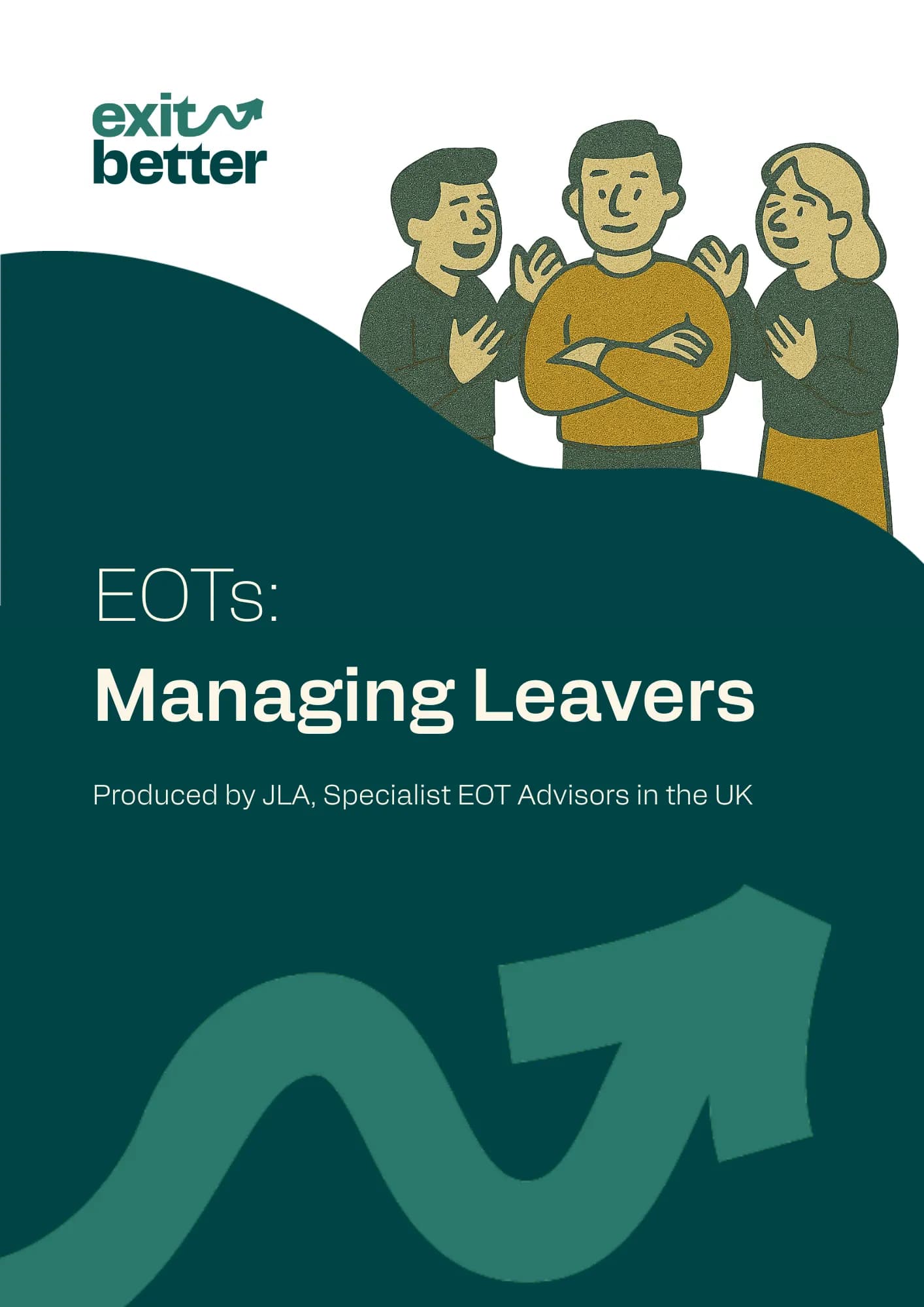
Free guide
EOTs: Managing Leavers
What happens when someone leaves an employee-owned company. We’ll email it to you.
Updated September 2026 for the post-Budget tax position.
Want to explore an EOT?
We’ll walk you through the basics. No pressure. No commitments.
- Free call
- Clear advice
- Real numbers
Takes 60 seconds. You’ve got nothing to lose.
Written by Parag Patel | Strategy and Tax Planning Consultant
Parag leads the Exit Better team at JLA Accountants, advising owners on employee ownership, succession and the tax that comes with both.
About the team